
Tooth decay is one of the most common dental issues but with prompt treatment, it doesn’t have to lead to serious problems. At Nilkanth Dental Clinic, we offer high-quality tooth fillings that restore the health, function, and appearance of your teeth quickly and effectively.
What Is a Tooth Filling?
A tooth filling is a dental procedure used to repair a cavity or minor tooth damage. The decayed or damaged part of the tooth is removed, and the area is cleaned and filled with a durable material such as composite resin, amalgam, or ceramic to seal the space and prevent further decay.
When Do You Need a Filling?
You may need a filling if you experience:
- Tooth sensitivity to hot, cold, or sweet foods
- Visible holes or dark spots on your tooth
- Sharp pain when biting down
- Food getting stuck between teeth
- A chipped or broken tooth
Early treatment with a filling can prevent the need for more invasive procedures like root canals or crowns.
Types of Fillings We Offer
At Nilkanth Dental Clinic, we provide various filling materials tailored to your needs:
- Composite (Tooth-Colored) Fillings: Aesthetic and natural-looking, ideal for front or visible teeth
- Amalgam Fillings: Durable and cost-effective, often used for back teeth
- Ceramic Fillings: Highly resistant to staining and long-lasting with a natural look
Your dentist will help you choose the best material based on the location of the cavity, your oral habits, and aesthetic preferences.
Our Filling Procedure
- Examination & Diagnosis – We assess the tooth using digital X-rays if needed.
- Decay Removal – The decayed portion is gently removed under local anesthesia.
- Filling Placement – The chosen material is placed, shaped, and hardened.
- Polishing & Bite Check – The filling is smoothed for comfort and proper bite alignment.
The process is quick, comfortable, and usually completed in a single visit.
Save Your Natural Tooth and Eliminate Pain
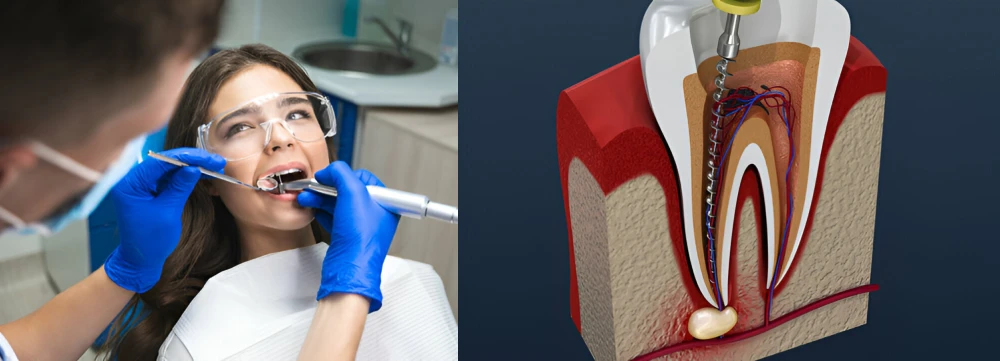
Experiencing constant tooth pain, sensitivity, or swelling? You may need a root canal a safe, effective treatment designed to relieve pain and save your natural tooth. At Nilkanth Dental Clinic, we offer gentle, precise root canal therapy using the latest dental technology to ensure your comfort and long-term oral health.
What Is a Root Canal?
A root canal is a dental procedure used to treat infection or inflammation inside the tooth. The treatment involves removing the infected pulp, cleaning and disinfecting the root canals, and then sealing the space with a biocompatible material. A crown is usually placed on top to restore strength and function.
Signs You Might Need a Root Canal
- Persistent toothache or throbbing pain
- Sensitivity to hot or cold that lingers
- Swelling or tenderness in the gums
- Darkening or discoloration of the tooth
- Pimple-like bump on the gums (abscess)
If you’re experiencing any of these symptoms, it’s important to seek dental care promptly to prevent further complications.
Benefits of Root Canal Therapy
- Relieves pain and discomfort
- Saves your natural tooth
- Prevents infection from spreading
- Restores normal chewing and function
- Eliminates the need for tooth extraction
Modern root canals are quick, safe, and virtually painless, thanks to advanced tools, digital imaging, and local anesthesia.
Our Root Canal Process
- Diagnosis & Imaging – We examine your tooth and take digital X-rays to assess the extent of infection.
- Treatment – The infected pulp is removed, the canals are thoroughly cleaned, and the tooth is sealed.
- Restoration – A crown is placed to protect and strengthen the tooth, restoring full function and aesthetics.
We prioritize your comfort at every stage and offer sedation options for anxious patients.
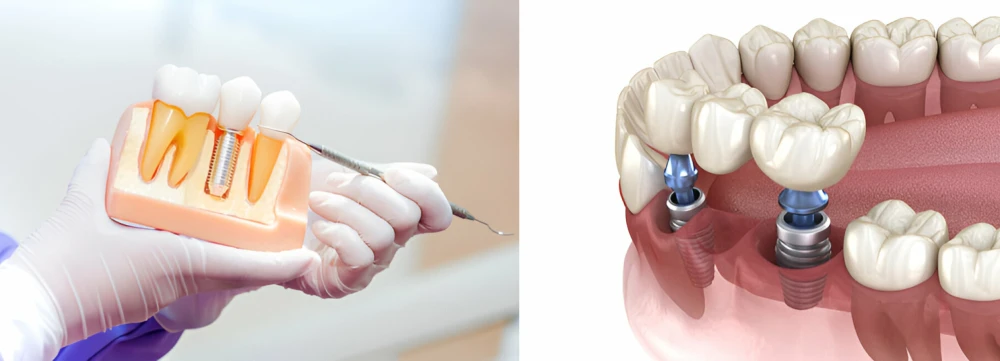
Missing teeth can impact more than just your appearance they can affect your ability to chew, speak, and maintain proper oral health. At Nilkanth Dental Clinic, we offer advanced dental implant solutions designed to restore the function and beauty of your smile with permanent, natural-looking results.
What Is a Dental Implant?
A dental implant is a titanium post surgically placed into the jawbone to serve as a sturdy foundation for a replacement tooth (crown), bridge, or even full dentures. Over time, the implant fuses with your bone in a process called osseointegration, providing a durable and long-lasting solution for tooth loss.
Benefits of Dental Implants
- Permanent & Stable: Unlike dentures or bridges, implants stay firmly in place and function like natural teeth.
- Natural Look & Feel: Implants are custom-designed to match your surrounding teeth in shape, size, and color.
- Preserve Jawbone & Facial Structure: Implants stimulate bone growth, preventing bone loss and facial sagging.
- Improved Chewing & Speech: Eat your favorite foods and speak clearly without discomfort or worry.
- No Impact on Neighboring Teeth: Unlike bridges, implants don’t require grinding down adjacent healthy teeth.
Our Dental Implant Process
- Consultation & Planning – We assess your oral health, take digital X-rays, and create a personalized treatment plan.
- Implant Placement – The implant post is placed into the jawbone during a minor surgical procedure.
- Healing Period – Over a few months, the implant integrates with the bone to form a strong base.
- Restoration – A custom crown, bridge, or denture is securely attached to complete your new smile.
Who Can Get Dental Implants?
Most healthy adults with one or more missing teeth are candidates for implants. Ideal patients should have good oral hygiene, healthy gums, and enough bone structure. If needed, bone grafting may be recommended before implant placement.
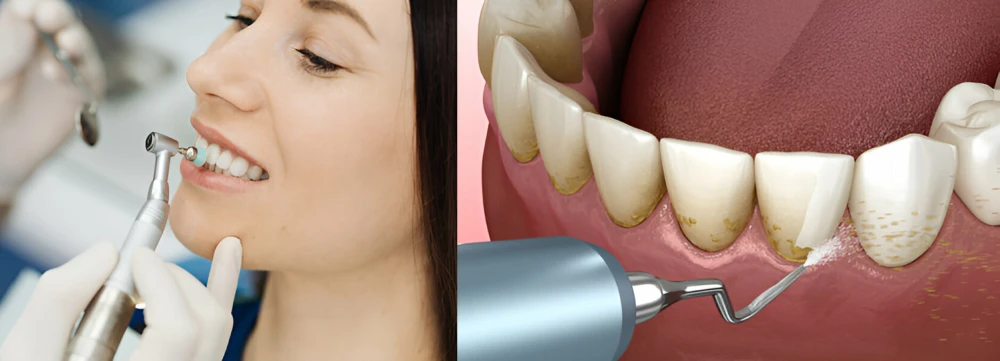
Plaque and tartar buildup not only affect the appearance of your teeth but can also lead to serious gum problems if left untreated. At Nilkanth Dental Clinic, we offer professional dental scaling a key preventive procedure that helps maintain healthy gums and a clean, fresh smile.
What Is Dental Scaling?
Dental scaling is a deep cleaning procedure that removes plaque, tartar (calculus), and bacteria from the surfaces of your teeth, especially below the gum line. It’s often the first line of defense against gum disease (gingivitis or periodontitis) and plays a crucial role in keeping your mouth healthy.
Scaling is typically performed using ultrasonic instruments and manual scalers to ensure thorough cleaning without damaging your teeth or gums.
Why Is Scaling Important?
Even with regular brushing and flossing, plaque can harden into tartar, which cannot be removed at home. Without proper treatment, tartar buildup can cause:
- Red, swollen, or bleeding gums
- Bad breath (halitosis)
- Gum recession
- Tooth sensitivity
- Loose or shifting teeth
Regular dental scaling helps prevent gum disease, reduce inflammation, and promote overall oral health.
Who Needs Scaling?
Scaling is recommended for:
- Patients showing early signs of gum disease
- Individuals who haven’t had a professional cleaning in 6+ months
- People with heavy tartar buildup or persistent bad breath
- Smokers or patients with diabetes (who are at higher risk of gum issues)
Your dentist will evaluate your gum health during a routine exam and recommend scaling if necessary.
Our Gentle, Effective Scaling Procedure
- Assessment & Diagnosis – We examine your gums and may take X-rays if needed.
- Ultrasonic Cleaning – High-frequency vibrations gently remove tartar and plaque.
- Manual Scaling – Fine instruments ensure precise cleaning in deeper pockets.
- Polishing – Your teeth are polished for a smooth, stain-free finish.
We use modern tools and techniques to make the process comfortable, safe, and effective.
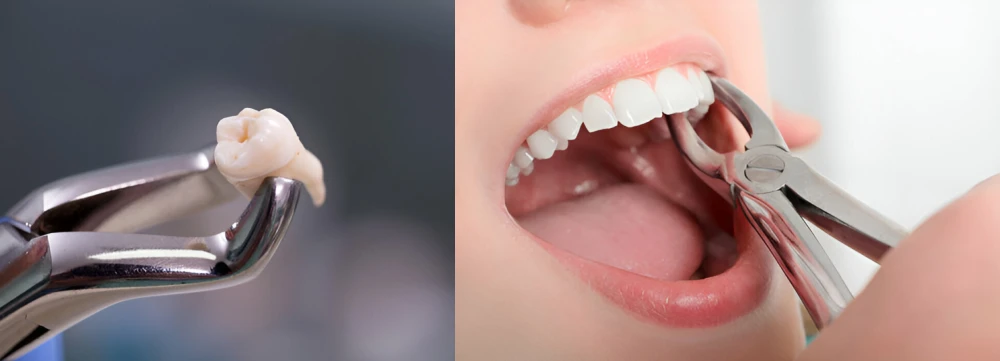
At Nilkanth Dental Clinic, we believe in preserving your natural teeth whenever possible. However, in some cases, tooth extraction becomes necessary to protect your overall oral health. Whether it’s due to severe decay, damage, infection, or overcrowding, our experienced team ensures your extraction is performed with care, comfort, and precision.
What Is a Tooth Extraction?
Tooth extraction is the removal of a tooth from its socket in the jawbone. This procedure is typically done when a tooth is too damaged or diseased to be saved through other treatments like fillings, root canals, or crowns. Extractions can be simple (for visible teeth) or surgical (for impacted or broken teeth below the gum line).
When Is Tooth Extraction Necessary?
You may need a tooth extraction if you have:
- Severe tooth decay or infection
- Advanced gum disease
- A broken or fractured tooth beyond repair
- Impacted wisdom teeth
- Overcrowded teeth before orthodontic treatment
- A baby tooth that hasn’t fallen out on time
Your dentist will evaluate your condition thoroughly and recommend extraction only if absolutely necessary.
Our Tooth Extraction Process
We make your comfort our top priority. Here’s what to expect:
- Consultation & X-rays – We assess the tooth and surrounding area.
- Anesthesia – Local anesthesia ensures the procedure is virtually painless.
- Tooth Removal – The tooth is gently loosened and extracted. Surgical extractions may involve small incisions.
- Aftercare Guidance – We provide detailed post-op instructions for a smooth recovery.
If needed, we’ll discuss tooth replacement options like dental implants or bridges to restore your smile.
Recovery & Aftercare
Most patients recover quickly after an extraction. To promote healing, we recommend:
- Resting for 24 hours
- Avoiding hard or hot foods for a few days
- Not smoking or using straws
- Taking prescribed medications as directed
Our team is always available to support you through recovery.